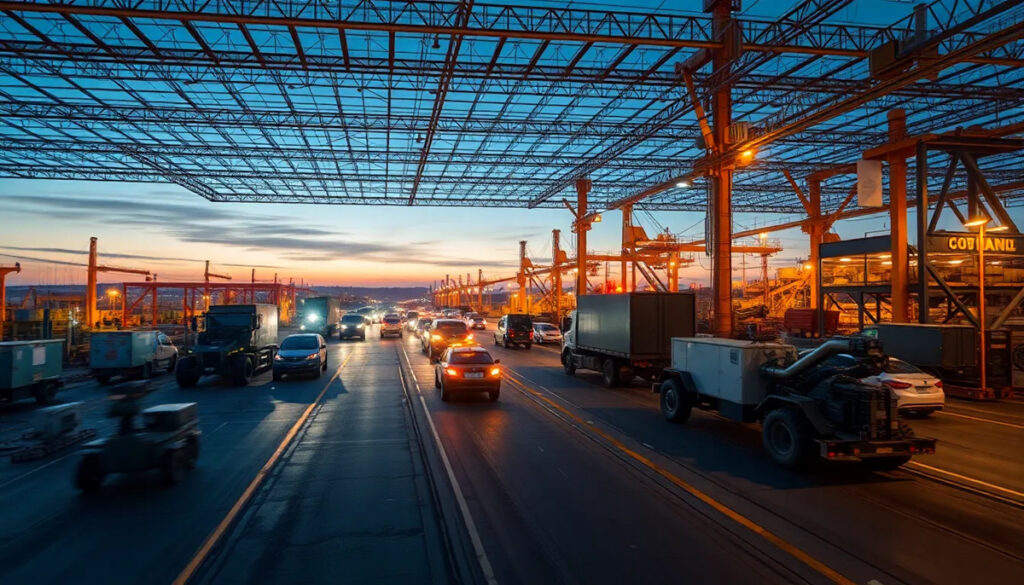
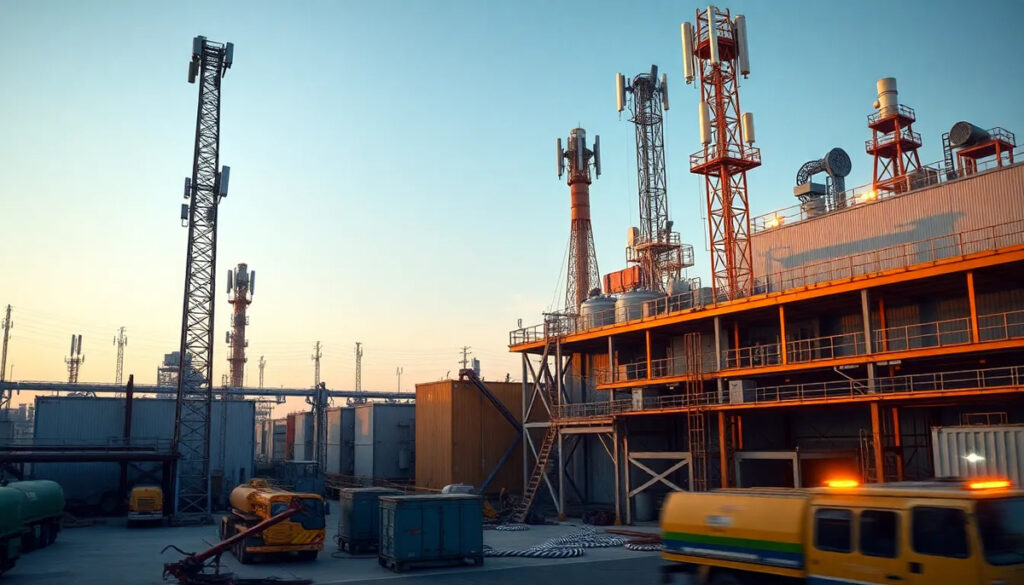
Dead zones are treated as unavoidable.
Every industrial site has them.
Everyone knows where they are.
Everyone works around them.
And the industry response has barely changed in years.
Add more access points.
Increase signal strength.
Try to fill the gaps.
It feels logical.
It’s also the wrong way to think about the problem.
Dead zones are a symptom, not the cause
Dead zones don’t exist because networks are underpowered.
They exist because networks are designed around the wrong assumptions.
Industrial environments are unpredictable by nature.
Metal structures block signals.
Machinery moves.
Layouts change constantly.
Signal disruption is not a rare event. It’s a permanent condition.
The real issue is not whether signal is blocked.
The issue is whether the network can handle it when it is.
Where traditional networks fail
Most wireless networks depend on a simple model.
Device connects to access point.
Signal weakens.
Device reconnects somewhere else.
That process introduces delay.
For people, it’s invisible.
For machines, it’s critical.
A robot entering a dead zone doesn’t just lose signal.
It loses awareness.
It loses coordination.
It loses reliability.
Multiply that across a site and you get:
Unpredictable behaviour
Reduced efficiency
Loss of trust in automation
Why adding infrastructure makes it worse
The default fix is to add more infrastructure.
More access points.
More overlap.
More complexity.

But that creates new problems.
Interference increases.
Network management becomes harder.
Performance becomes less predictable.
And the core issue remains.
You’re still relying on single connection paths.
If that path fails, the system fails.
A different way to approach the problem
Modern industrial networking is starting to shift away from coverage as the primary goal.
Instead of trying to eliminate dead zones, it accepts them.
Signal will always be blocked.
That’s not the issue.
The issue is whether connectivity survives.
In newer models:
Devices connect to multiple nodes
Data can take multiple routes
Connections adapt in real time
So when a signal is blocked:
The network doesn’t stop
It simply reroutes
What this looks like in practice
Imagine a vehicle moving through a warehouse.
Instead of relying on one access point, it maintains multiple connections.
As it moves behind an obstruction:
The primary signal drops
A secondary path takes over instantly
No delay.
No reconnection.
No disruption.
The machine doesn’t even notice.
Why this matters now
As automation increases, the cost of dead zones increases with it.
More machines means:
More movement
More complexity
More reliance on continuous connectivity
Dead zones go from being inconvenient to being operational risks.
The shift already happening
Forward-thinking operators are no longer asking:
“How do we remove dead zones?”
They’re asking:
“How do we make them irrelevant?”
That’s the shift.
And it changes everything.
Explore how this works
This is exactly where adaptive mesh networking changes the model completely.
[See how mesh networking overcomes dead zones in real environments]
Planning a deployment?
If your network still depends on fixed coverage zones, it will struggle as your operation scales.
[Talk to CMI Technology about your deployment]