A simple test most designs fail
There is a simple way to evaluate almost any industrial wireless design.
It does not involve throughput numbers.
It does not involve latency charts.
It does not involve vendor comparisons.
It involves asking one question.
What happens when reality interferes?
Most industrial networks look solid until something changes. And something always changes.
The reality industrial networks have to survive
Industrial environments are not controlled spaces.
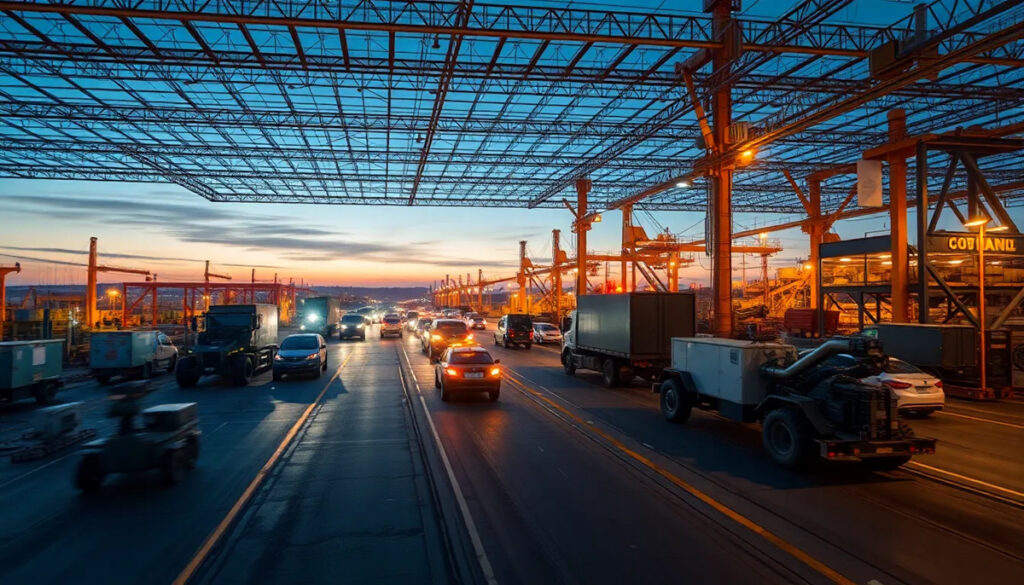
Vehicles block line of sight without warning.
Nodes get moved or removed mid-shift.
Temporary assets become permanent by accident.
Sites expand faster than the network plan.
Operations change before documentation does.
None of this is unusual. It is normal.
Yet many networks are still designed as if these events are edge cases.
They are not.
The uncomfortable answers
Ask what happens when one of those changes occurs and listen carefully to the answer.
If the answer includes phrases like:
“We would need to redesign.”
“We would re-survey that area.”
“That would be handled in phase two.”
“We would add another access point.”
Then the network is already limiting the operation.
A network that requires redesign every time the environment changes is not resilient. It is brittle.
Why this keeps happening
This problem persists because of how industrial networks are usually delivered.
System integrators are under pressure to meet scope, timelines and budgets.
End users want predictability and clear deliverables.
The easiest way to satisfy both is to design for a snapshot in time.
That snapshot rarely survives first contact with operations.
Once the site starts moving, the network starts falling behind.
Dynamic operations need dynamic networks
Modern industrial operations are fluid by default.
Layouts change.
Assets move.
Automation increases.
Safety requirements tighten.
Remote access becomes essential.
A static network cannot keep up with a dynamic operation.
The network either adapts continuously, or it becomes technical debt.

Rethinking the role of the network
The most forward-looking organisations are changing how they think about connectivity.
They no longer see the network as fixed infrastructure.
They see it as a living system.
A system that:
Assumes movement
Absorbs disruption
Recovers automatically
Adapts without manual intervention
This shift reduces the need for constant redesign and firefighting.
What living networks do differently
Living networks behave differently under stress.
They reroute traffic automatically.
They tolerate node loss.
They expect topology changes.
They maintain service continuity without human involvement.
When something changes, the network adjusts rather than escalating the issue.
That difference shows up directly in operational performance.
The hidden cost of rebuilding the same network
Many organisations unknowingly rebuild the same network again and again.
Different project names.
Different timelines.
Different budgets.
The underlying architecture remains unchanged.
Each rebuild carries cost, delay and risk.
Each rebuild reinforces the idea that the problem is inevitable.
It is not.
The problem is architectural.
A shared responsibility
This is not a criticism of system integrators or end users.
It is a challenge to both.
Integrators need to stop designing for static environments that do not exist.
End users need to stop accepting networks that only work until the site changes.
Resilience is not delivered by documentation.
It is delivered by design choices that reflect reality.
Asking better questions earlier
Better outcomes start with better questions.
What happens when assets move?
What happens when line of sight disappears?
What happens when the site expands?
What happens when nodes are removed unexpectedly?
If the design cannot answer those questions confidently, it needs to change.
Conclusion: accept movement, or keep rebuilding
Nothing on an industrial site stays still for long.
Designing networks as if it does is the fastest way to limit operations.
The most disruptive change many organisations can make is also the simplest.
Accept that nothing stays still.
Design the network accordingly.
When the network expects movement, it enables progress.
When it assumes stability, it becomes the bottleneck.