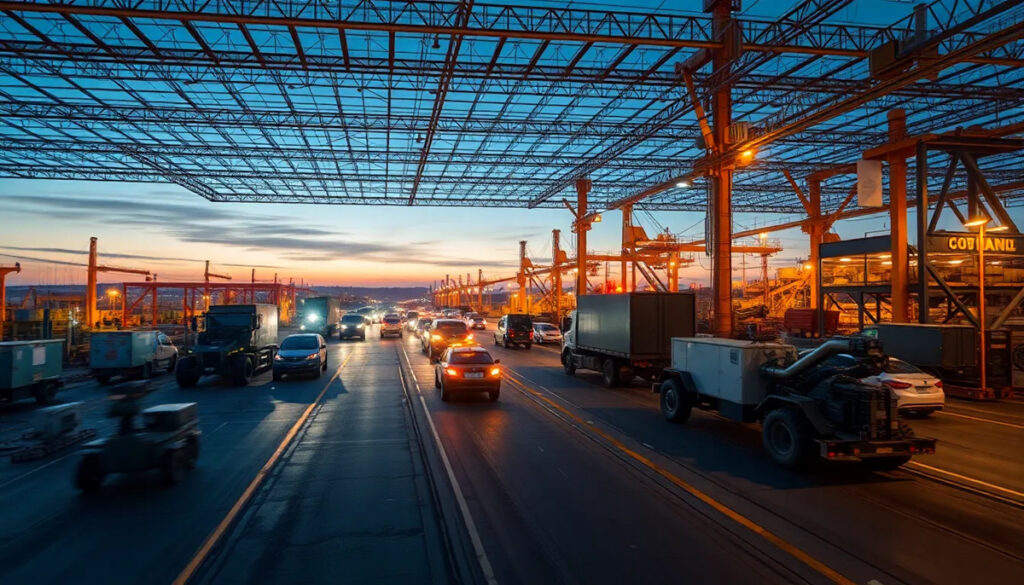
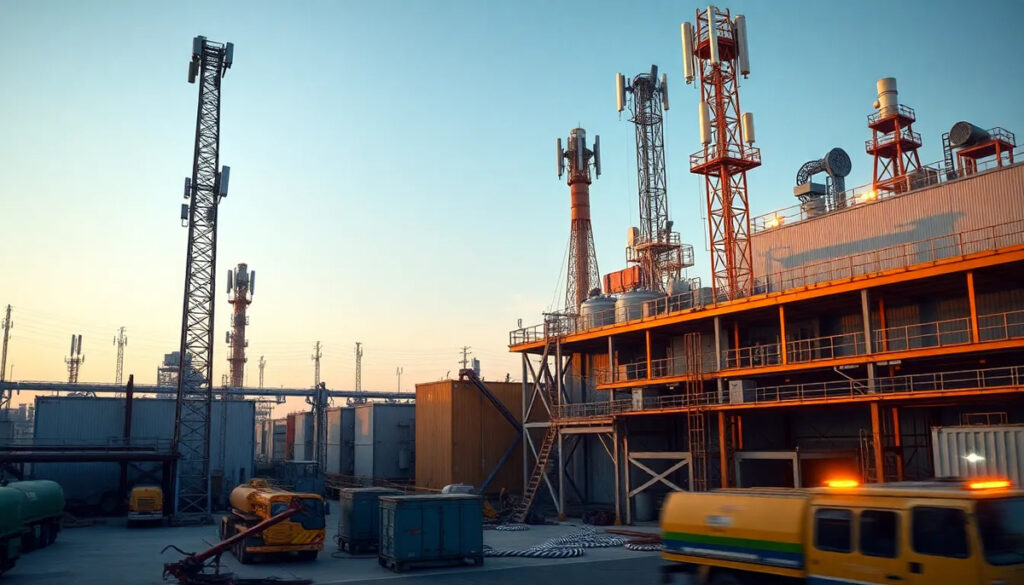
Heavy industry is going through a quiet reset.
Not the loud kind filled with big announcements and dramatic reinventions.
A practical one.
A grounded one.
The type that starts with small operational shifts that end up changing the entire way a site functions.
Operators across ports, rail, logistics, mining, energy and large construction are facing the same pressures.
Tighter budgets.
Higher safety expectations.
Stricter environmental targets.
Demand for real time data.
More unpredictable operating conditions.
Less tolerance for downtime.
The problem is simple.
The infrastructure that supports today’s operations was not built for today’s demands.
Lighting, connectivity, safety systems and analytics were all installed as separate systems, usually at different times, each with its own wiring, its own power, its own maintenance schedule and its own limitations.
The result is a patchwork.
Parts of the site are ultra connected.
Parts are dead zones.
Some system data is real time.
Some is delayed.
Some work zones are brilliantly lit.
Some are guesswork.
Some sensors talk to each other.
Some sit alone on poles waiting for the wind to be kind.
Heavy industry has evolved.
The infrastructure has not.
Intelligent lighting is becoming the unlikely backbone of the next generation of heavy industry because it solves this fragmentation at the root.
The Infrastructure Stack Is Collapsing Into One Grid
For the last few decades, everyone built sites by layering separate systems.
Lighting on one set of poles.
Cameras on another.
Sensors placed wherever there was a spare bracket.
Wireless repeaters strapped to fences.
Compute hardware locked in distant rooms.
Analytics running on servers miles away.
It worked, but only through constant maintenance, endless workarounds and a lot of luck.
Intelligent lighting compresses this sprawl into a single grid. The same poles that light the site now carry sensors, wireless coverage, edge processing and real time visibility. The infrastructure stack is consolidating.
This is not futuristic.
It is practical.
And it is already happening.
Why Heavy Industry Is Ready for This Shift
Three pressures are forcing this transformation whether people want it or not.
Sites Are More Dynamic Than Ever
Automation, temporary works, traffic flow changes, weather disruption and flexible work patterns have shattered the idea of fixed infrastructure.
Static lighting and static networks cannot keep up.
Downtime Has Become Unacceptable
When a single blind spot, connectivity drop or outdated fixture can slow operations, the cost compounds quickly.
Environmental Targets Are Tightening
The old way of lighting, powering, monitoring and managing sites is wasteful.
Heavy industry cannot justify it anymore.
Intelligent lighting cuts straight through all three problems.
Lighting Is Becoming the Digital Nervous System
Traditional lighting illuminates the site.
Intelligent lighting interprets it.
It senses movement
Not just motion, but patterns.
Vehicle behaviour.
Pedestrian flow.
Equipment activity.
It adapts in real time
Brighter where work is happening.
Lower where it is not.
Higher contrast where visibility dips.
Reduced glare where it hits reflective surfaces.
It carries data across the site
Wireless networks extend from the same poles that hold the lights.
This eliminates dead zones and creates consistent coverage.
It processes data at the edge
Lighting units are becoming small compute modules.
CCTV analytics.
Environmental sensors.
Predictive maintenance calculations.
Safety triggers.
All processed locally.
It integrates with safety systems
Lighting becomes part of incident prevention, not just response.
This is the future backbone.
One grid.
Multiple roles.
Consistent infrastructure.
Where the Real Value Shows Up
The value is not theoretical.
It shows up in practical, measurable improvements.
Safer Sites
Blind spots reduce.
Movement becomes clearer.
Operators see hazards earlier.
Cameras perform better.
Workers gain more confidence in night operations.
Lower Power and Fuel Costs
Adaptive lighting means fewer wasted lumens.
Generators run lighter.
Energy output drops.
Fixture life extends.

Cleaner Data
Uniform wireless coverage means consistent telemetry.
Sensors stop operating in isolation.
CCTV analytics stabilise.
Supervisors get real time information instead of delayed updates.
Less Physical Clutter
One pole instead of five.
One backbone instead of multiple overlapping systems.
Maintenance becomes simpler.
Faster Response Capability
Edge processing reduces latency.
Alerts trigger faster.
Incidents are spotted earlier.
Decision makers act in seconds, not minutes.
Heavy industry has been waiting for a way to tie visibility, connectivity and safety together.
Intelligent lighting is doing it without forcing operators to rebuild entire sites from scratch.
The Pushback and Why It Happens
Every major shift faces resistance.
This one is no different.
Teams Worry About Disruption
Old infrastructure feels familiar.
Replacing it feels risky.
Operators worry that upgrades will cause downtime.
Modern systems are designed to integrate with existing poles, minimising disruption.
Budget Silos Make Decisions Slow
Lighting, wireless, security and connectivity often sit under different budgets.
Intelligent lighting challenges this separation.
The Old Model Feels Safe
Not because it is safe, but because it is predictable.
Some Teams Fear Transparency
New systems reveal blind spots and inefficiencies that old lighting hid.
Transparency forces improvement.
Not everyone welcomes that.
But the sites that push past the resistance gain a competitive advantage that grows every year.
The Future of Heavy Industry Will Run on Intelligent Infrastructure
Sites will not build separate systems for lighting, connectivity, safety and analytics anymore.
It is inefficient.
It is outdated.
It is expensive.
It is fragile.
One infrastructure layer will carry:
Lighting
Wireless coverage
Edge compute
CCTV analytics
Vehicle tracking
Environmental monitoring
Access control signals
Operational telemetry
Safety triggers
This is not a bold prediction.
It is the natural evolution of how industrial sites are already adapting under pressure.
Heavy industry is entering a phase where visibility, data and safety must all support each other. Intelligent lighting is becoming the one piece of infrastructure that can handle all three at scale.
Conclusion
The future of heavy industry will be built around infrastructure that adapts, senses, processes and communicates in real time.
Intelligent lighting is the foundation of that shift.
Not because it is flashy.
Not because it is fashionable.
But because it solves three core problems that heavy industry can no longer ignore.
Safety.
Efficiency.
Connectivity.
Lighting is no longer a utility.
It is becoming the backbone.