The uncomfortable starting point
Most industrial wireless networks were never designed for machines.
They were designed for people.
Laptops moving occasionally between offices.
Handheld scanners connecting near access points.
Workers checking dashboards or sending data back to a central system.
Even when deployed in factories, ports or logistics yards, the underlying assumption stayed the same.
Devices move slowly.
Connections can pause briefly.
A dropped link is inconvenient but acceptable.
That assumption breaks the moment robots enter the environment.
Robots expose weaknesses humans hide
Humans compensate for poor connectivity without thinking.
If a tablet freezes, someone waits.
If video drops, someone retries.
If coverage dips, someone walks a few steps.
Machines do not do this.
Autonomous vehicles expect continuous communication.
Robots rely on real-time coordination.
Control systems depend on uninterrupted feedback loops.
A delay of seconds is not annoying.
It is failure.
This is why many automation projects struggle after deployment even when the robotics themselves work perfectly.
The problem is not the machines.
It is the network they inherited.
The office WiFi problem nobody talks about
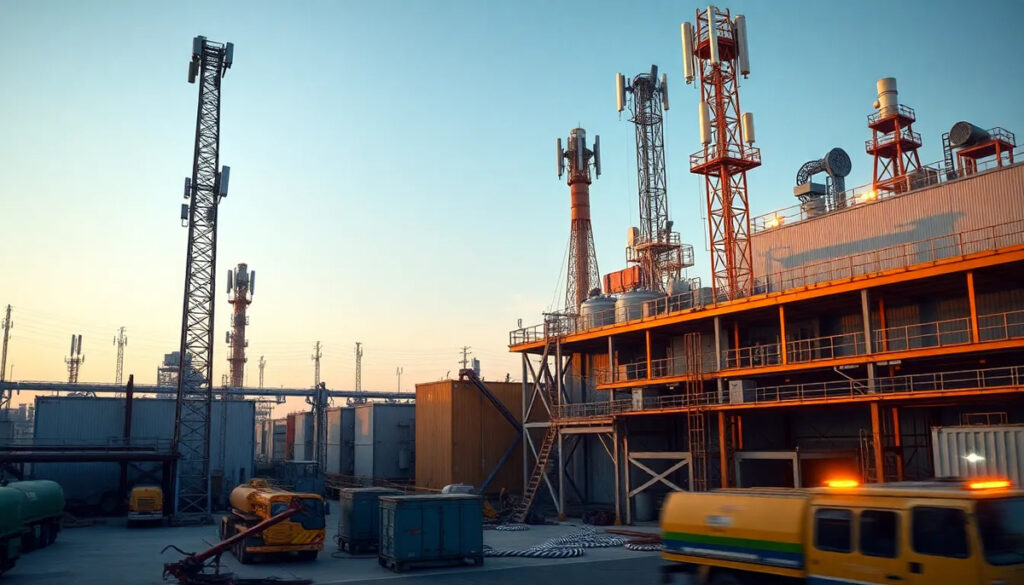
Industrial environments often deploy enterprise WiFi architectures originally designed for buildings.
Fixed access points.
Controller-based roaming.
Coverage planned around static infrastructure.
Coverage maps look excellent.
But coverage is not continuity.
When a robot moves between access points, the network performs a handover. During that handover, connectivity briefly drops.
For people, this is invisible.
For machines, it interrupts control.
As fleets grow, these small interruptions multiply into instability.
Movement changes everything
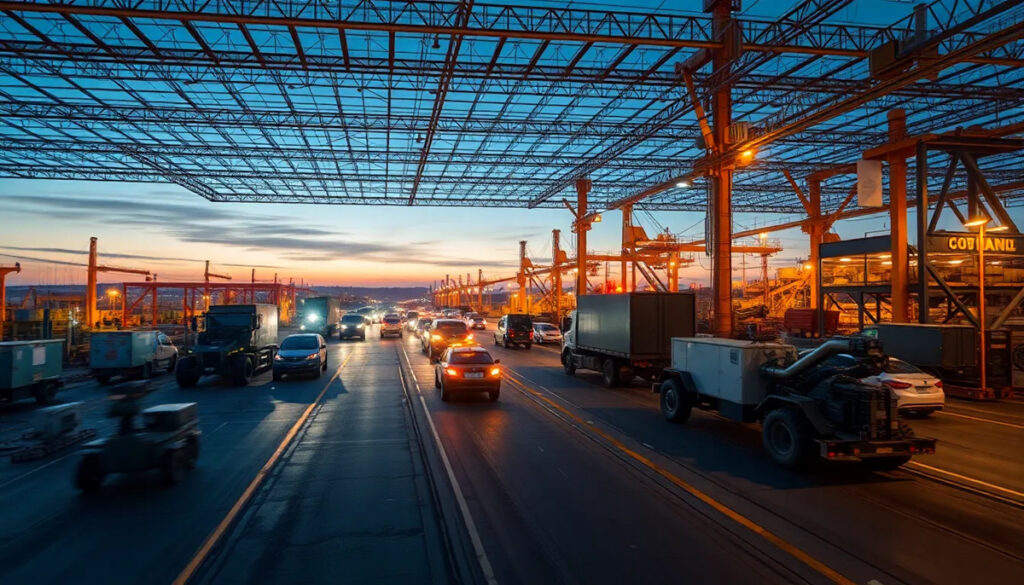
Modern industrial operations are defined by motion.
Autonomous forklifts navigating warehouses.
AGVs transporting materials.
Mobile inspection systems.
Drones collecting site data.
Vehicles coordinating in real time.
The network topology changes constantly because the environment itself moves.
Traditional infrastructure expects devices to adapt to the network.
Machine environments require the opposite.
The network must adapt to movement.
A different model: networks that move with machines
Instead of relying on fixed infrastructure, a new networking approach is emerging.
Devices connect directly to each other.
Machines extend connectivity as they move.
Multiple communication paths exist simultaneously.
Connections reform automatically when conditions change.
In this model, the network behaves more like a living system than a fixed installation.
Connectivity becomes fluid rather than anchored.
The result is not stronger signal strength.
It is uninterrupted communication.
Why continuity matters more than speed
Industrial networking conversations often focus on bandwidth and latency.
Those metrics matter, but only after stability exists.
A fast network that disconnects briefly is less useful than a modest network that never drops.
Robots do not need peak speeds.
They need persistence.
Continuous awareness.
Continuous coordination.
Continuous control.
Continuity is what allows automation to scale safely.
The shift industry is beginning to recognise
Across logistics, manufacturing and heavy industry, operators are realising something important.
Automation is not limited by robotics capability.
It is limited by connectivity assumptions inherited from the past.
The next evolution in industrial networking is not faster radios or larger access points.
It is designing networks specifically for moving machines.
Why this matters now
Automation is accelerating.
Labour shortages continue.
Safety expectations increase.
Efficiency demands grow.
Operations expand beyond fixed infrastructure.
Networks designed for stationary devices cannot support this future.
The organisations that recognise this early will scale automation smoothly.
Those that do not will continue troubleshooting connectivity instead of advancing operations.
Conclusion
The question industrial operators should be asking is no longer:
“How strong is our coverage?”
It is:
“Can our network move as fast as our machines?”
Because the moment robots become central to operations, the network stops being background infrastructure.
It becomes part of the machine itself.