Across mining, agriculture, ports, rail and construction, operators are under pressure to modernise. Labour shortages, safety risks, emissions targets, and rising costs are pushing industries to adopt autonomous vehicle systems at scale.
But there’s a problem — full fleet replacement is expensive, time-consuming, and, in many cases, unnecessary.
For most operators, the real challenge isn’t the mechanics — it’s the digital gap. Their existing fleets are solid, but they lack the autonomy, connectivity, and intelligence to operate in modern digital environments.
That’s where retrofit autonomy comes in.
Instead of scrapping viable machines, more and more organisations are choosing to upgrade them — transforming legacy assets into connected, intelligent, and fully autonomous systems at a fraction of the cost.
Let’s explore why retrofit autonomy is quickly becoming the go-to solution for industrial transformation.
1. The Hidden Cost of “Going New”
Buying a new OEM autonomous vehicle sounds appealing — until you crunch the numbers:
-
Lead times of 18–36 months
-
Upfront costs that can exceed £1 million per vehicle
-
Full replacement of operational procedures, training, and infrastructure
-
Environmental waste from decommissioned machinery that still works perfectly well
On top of that, many newer autonomous systems are designed to work only within their proprietary ecosystem — which means you can’t mix and match across vendors or retrofit other equipment down the line.
For most businesses, especially those with mixed fleets and tight margins, this isn’t a viable path.
2. Retrofitting Makes Economic and Environmental Sense
Retrofitting allows you to turn existing vehicles — haul trucks, tractors, reach stackers, shunters — into smart, connected, and fully autonomous platforms.
The benefits are hard to ignore:
-
Lower Cost: Retrofitting typically costs 20–30% of buying new.
-
Faster Deployment: Kits can be installed and calibrated in weeks, not years.
-
Sustainability: Extends the useful life of equipment, reduces emissions, and supports circular economy goals.
-
Modular Flexibility: Start with drive-by-wire or teleoperation and upgrade to full autonomy over time.
It’s not just about saving money — it’s about future-proofing your operations.

3. Real-World Applications Across Sectors
This isn’t theory. Retrofit autonomy is already being deployed across EMEA — and delivering game-changing results.
Mining Sites:
Haul trucks and loaders are being upgraded with autonomous navigation systems and real-time mesh connectivity. Vehicles operate autonomously within defined zones, improving safety and uptime.
Agriculture:
Older tractors and sprayers are retrofitted to run autonomously across fields, integrated with AI vision systems that monitor crop health and optimise yield — all while connected over secure wireless mesh or satellite backhaul.
Ports & Terminals:
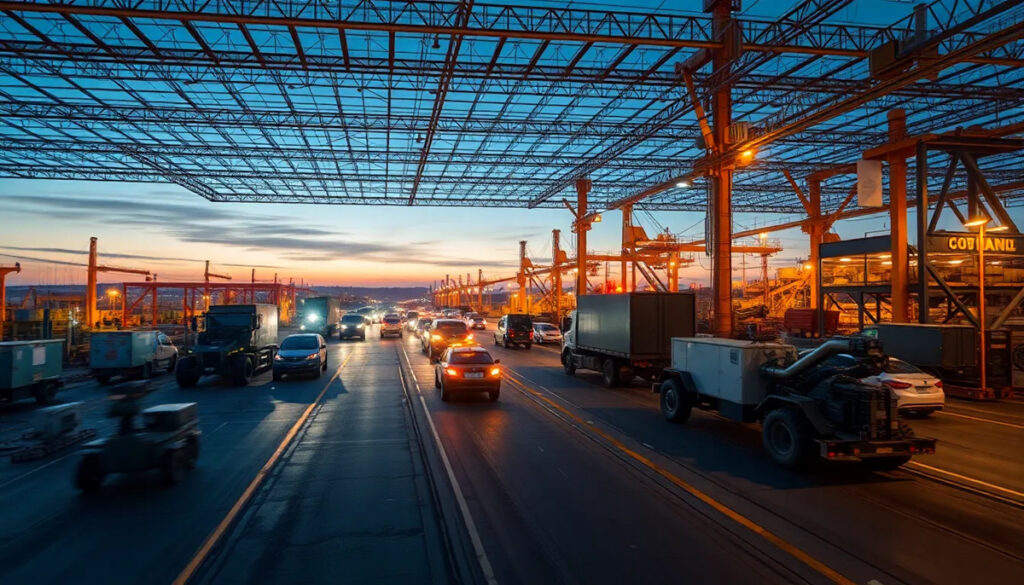
Terminal tractors and reach stackers are being upgraded to support automated container movement and remote operation. Operators benefit from increased throughput and reduced downtime.
Rail Yards:
Retrofit kits allow inspection and service vehicles to operate without human intervention. Combined with mesh connectivity and AI visual inspection, teams reduce manual risk and increase efficiency.
Construction & Infrastructure:
Inspection buggies, diggers and support vehicles are being modernised to allow remote operation and predictive maintenance using edge AI and mesh networks.
4. The Technology Behind the Retrofit
A successful retrofit autonomy ecosystem includes:
-
Drive-by-wire kits that convert mechanical systems into electronically controlled platforms
-
Autonomy software and navigation stacks that enable full or partial automation
-
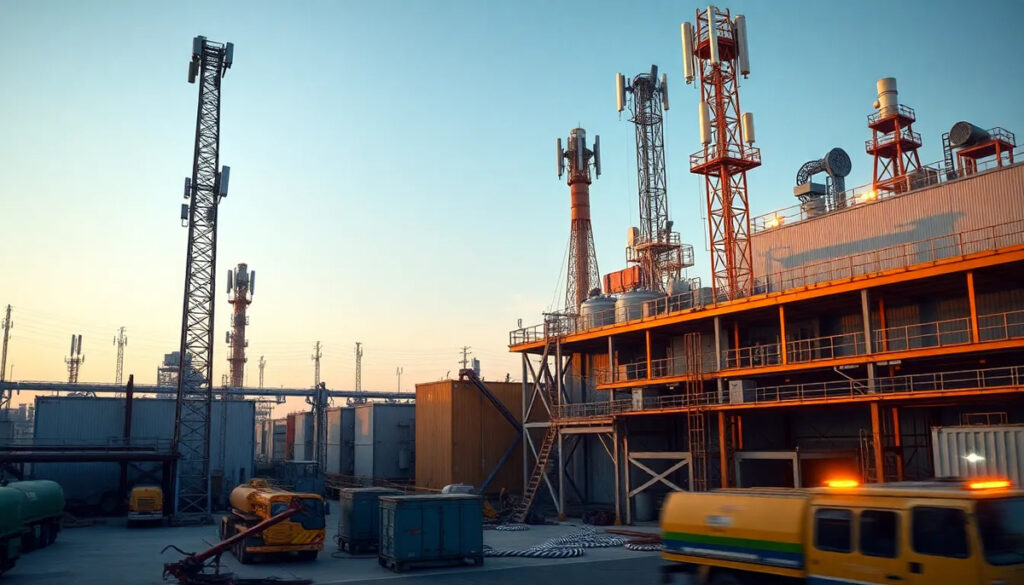
Mobile wireless mesh networking for site-wide comms, with satellite or cellular backhaul
-
Edge AI for localised decision-making, obstacle detection, and route optimisation
-
Industrial cybersecurity layers to protect critical infrastructure from external threats
Together, these elements create a plug-and-play framework that can be adapted to a wide range of vehicles and environments.
5. Rapid ROI with Minimal Disruption
Unlike full vehicle replacement, retrofitting doesn’t require a complete organisational overhaul.
You can start small — pilot one or two machines, test performance, then scale up based on results. Training is easier, too, since teams are already familiar with the base vehicles.
More importantly, many retrofitted vehicles start delivering ROI within months. Increased utilisation, reduced downtime, improved safety, and better data insights all contribute to faster payback.
6. A New Standard for Industrial Innovation
Retrofitting isn’t a second-best alternative. It’s the smarter, faster, greener way forward.
Organisations that embrace retrofit autonomy are not only modernising their operations — they’re building more resilient, more sustainable businesses that can adapt as technologies evolve.
As autonomy continues to shape the future of industrial operations, the companies that move early — and wisely — will be the ones who stay ahead.
Conclusion
Not every site can afford to start from scratch. And with so many solid machines already in operation, they shouldn’t have to.
Retrofitting offers a commercially viable, operationally realistic path to autonomy that doesn’t rely on replacing your fleet — just rethinking how you use it.
And in a world where agility, sustainability, and innovation are no longer optional, that rethink might be the most important shift you make this decade.