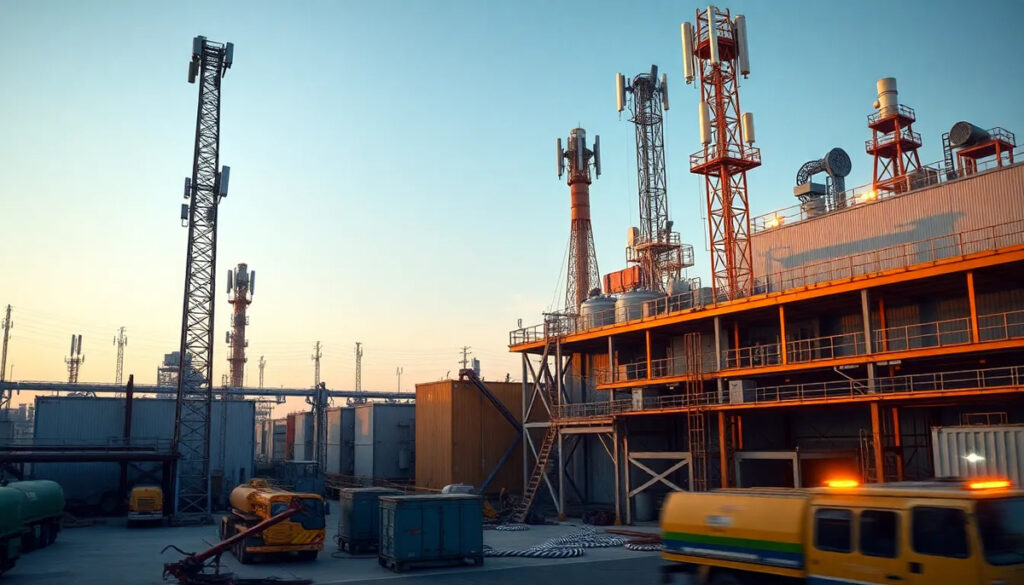
From music festivals to construction sites, public events to emergency response zones — temporary deployments are everywhere. But while these setups might be short-lived, the infrastructure supporting them needs to be anything but temporary.
When it comes to connectivity, too many projects make do with basic 4G hotspots or hastily run cables. The result? Patchy coverage, poor performance, frustrated users — and in some cases, operational failure.
In this post, we’ll explain why short-term sites need permanent-grade wireless mesh infrastructure — and how organisations across the UK are already making the shift.
The Problem with “Good Enough” Connectivity
Let’s be honest — most temporary projects don’t prioritise networking. The logic is: “It’s only a few weeks, it’ll do.”
But here’s what “it’ll do” usually means in reality:
Frequent dropouts during peak use
No access control or security
Delays in data upload or footage review
Inability to remotely manage devices
Zero resilience if something fails
Whether it’s event security or a temporary control cabin on a new build site, poor connectivity can jeopardise the whole operation.
Mesh Makes Temporary Strong
A true wireless mesh network brings permanent-grade resilience to temporary environments:
Self-configuring: Drop a node, and it finds its neighbours. No cabling or line-of-sight needed.
Self-healing: If one unit fails, traffic reroutes via the next-best link.
Mobile-ready: Nodes can be moved as the site evolves without network redesign.
Secure: Encrypted transmission and role-based access out of the box.
The best part? It’s all reusable. When the project ends, just lift and re-deploy to the next site.

Real-World Use Cases
Here’s where it’s already making a difference:
Construction Sites
Site cabins, access control turnstiles and security towers linked wirelessly across sprawling footprints.
Festivals and Events
Lighting rigs, audio teams, security teams and cashless systems all communicating on the same resilient mesh.
Disaster Recovery Zones
Emergency teams setting up communications in hours, not days, with no need for mobile signal or fibre.
Utility Works or Road Maintenance
Remote CCTV and signage powered by mesh, easily moved as work zones progress.
What to Look for in a Wireless Mesh for Temporary Sites
Portability: Ruggedised enclosures, battery or solar support
Plug-and-play simplicity: Minimal IT expertise required
Scalability: Easy to add/remove nodes without config
Reliability: Proven performance across multiple hop paths
Vendor-neutral integrations: Compatible with access control, CCTV, sensors
If you’re planning a temporary site — make sure the technology you’re using isn’t temporary in quality.
Conclusion
Just because a deployment is short-term doesn’t mean it should be short-sighted.
With the right wireless mesh infrastructure, your temporary setup can enjoy the same uptime, performance and flexibility as any permanent site — without the overhead of laying cable or relying on patchy mobile signal.
As more organisations in the UK adopt this model, it’s clear: temporary doesn’t have to mean second-rate.