Automation is advancing faster than infrastructure thinking
Industrial automation is no longer experimental.
Autonomous vehicles move materials.
Robots inspect assets.
Machines coordinate workflows without human instruction.
Operations increasingly depend on real-time decision making.
Yet many deployments still struggle after the pilot phase.
Not because automation fails.
Because the infrastructure supporting it was designed for a different era.
The problem is not technological capability.
It is mindset.
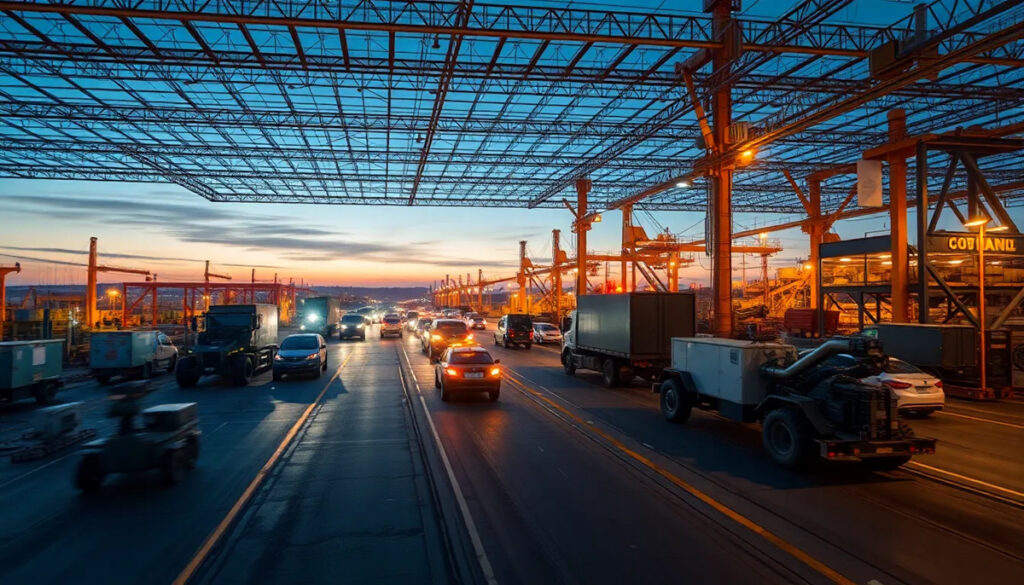
We still build networks like roads
Traditional infrastructure thinking treats networks like roads.
You design routes.
You define fixed paths.
You control traffic centrally.
You expect predictable movement.
This model worked when systems were static and operations changed slowly.
But automation behaves differently.
Machines do not follow predictable patterns forever.
Workflows evolve continuously.
Sites expand organically.
Temporary deployments become permanent without warning.
A fixed-path mindset collides with a dynamic reality.
Automation behaves more like an ecosystem
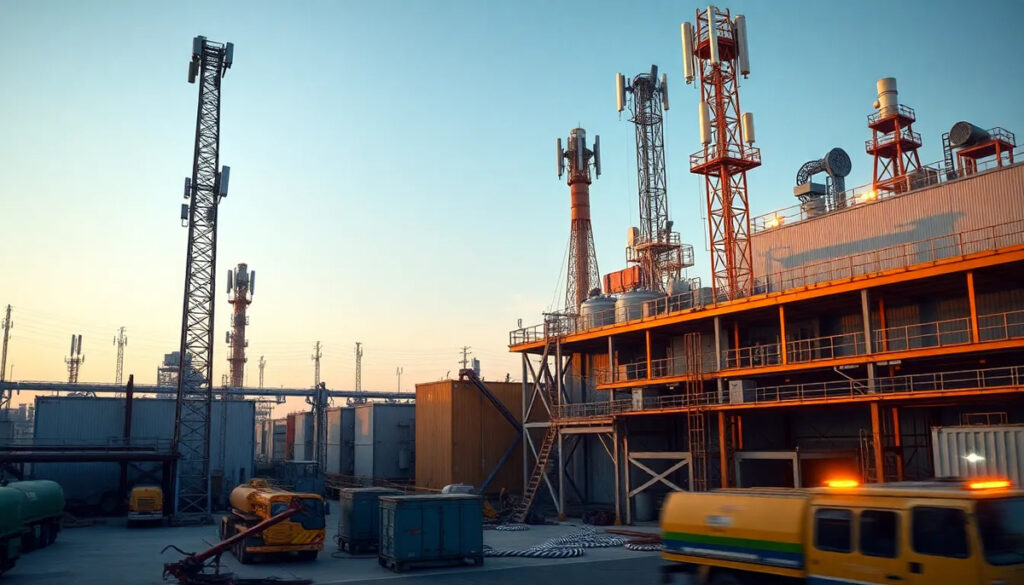
Modern industrial environments resemble ecosystems rather than engineered layouts.
Assets interact constantly.
Connections form and dissolve.
Conditions change minute by minute.
In ecosystems, resilience comes from adaptability, not rigidity.
Biological systems survive because they reorganise themselves automatically when conditions change.
Automation environments require the same principle.
Connectivity must adapt continuously instead of relying on predefined structure.
The hidden friction operators feel
Many operators sense something is wrong long before they can explain it.
Automation works perfectly in controlled trials.
Performance drops when scaled.
Connectivity issues appear intermittently.
Engineers spend increasing time troubleshooting.
Nothing seems fundamentally broken.
But nothing feels stable either.
This friction is often misdiagnosed as robotics immaturity or software complexity.
In reality, the network architecture is resisting the operational model.
Static infrastructure creates dynamic problems
When networks assume stability, movement becomes disruption.
Each change forces adjustment.
New coverage planning.
Additional hardware.
Manual optimisation.
Temporary fixes layered over existing systems.
Over time, complexity grows faster than capability.
The network becomes something teams work around instead of relying on.
Automation slows not because machines cannot scale, but because connectivity cannot evolve fast enough.
A shift toward adaptive infrastructure
Forward-looking organisations are beginning to rethink connectivity entirely.
Instead of treating networks as installations, they treat them as adaptive systems.
Connections form dynamically.
Multiple paths exist simultaneously.
Devices cooperate to maintain continuity.
The network reorganises itself as operations change.
Infrastructure stops dictating behaviour.
It supports it.
Why this matters beyond automation
This shift affects more than robotics.
Logistics operations become more flexible.
Temporary deployments become easier.
Expansion requires less redesign.
Resilience improves naturally.
Adaptive networking reduces friction across the entire operation, not just autonomous systems.
The real competitive advantage
The biggest advantage is not speed or bandwidth.
It is operational freedom.
Teams can change layouts without fearing connectivity loss.
Automation can scale without redesign cycles.
Innovation happens faster because infrastructure stops being the constraint.
Organisations move from maintaining networks to enabling operations.
Conclusion
Automation is not failing because machines are not ready.
It struggles because infrastructure thinking has not caught up.
Networks built like roads cannot support environments that behave like ecosystems.
The next generation of industrial connectivity will not be defined by stronger infrastructure.
It will be defined by infrastructure that adapts.
And the organisations that recognise this shift early will move faster than everyone else.