The industry keeps blaming the wrong thing
If you spend enough time around industrial networking projects, you will hear the same complaints repeated again and again.
“The WiFi is unreliable.”
“LTE didn’t work like we hoped.”
“Private 5G will fix this.”
The pattern is predictable. A network struggles in a live environment and the immediate reaction is to blame the radio technology.
But in most cases, the radio is not the problem.
The real issue sits one layer above. Architecture.
Office thinking in industrial environments
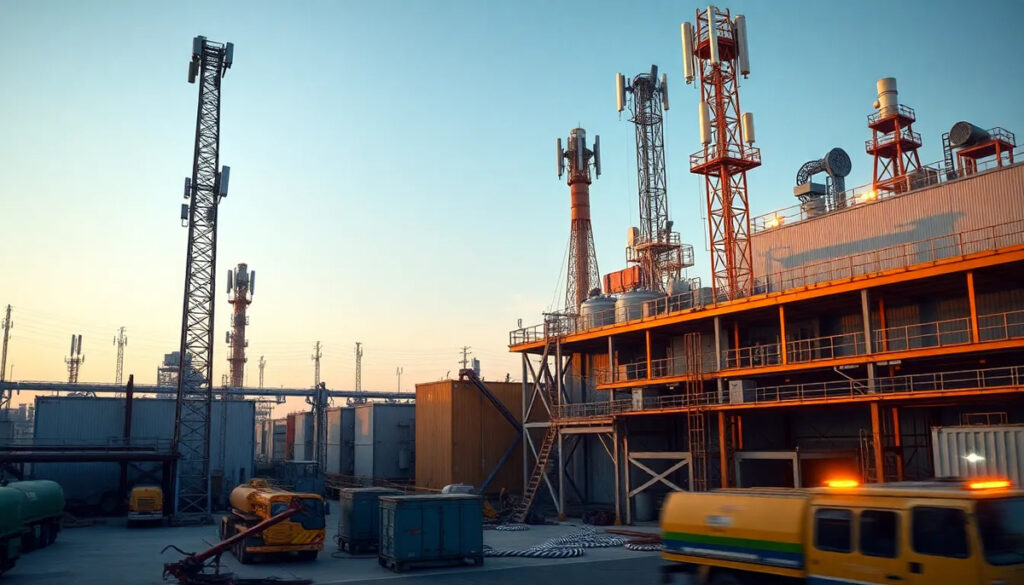
Many industrial wireless networks are still designed as scaled-up office networks.
Fixed access points.
Centralised controllers.
Predictable coverage assumptions.
Static paths.
That model works perfectly well in an office where desks stay put, walls do not move and people follow repeatable patterns.
Industrial environments do the opposite.
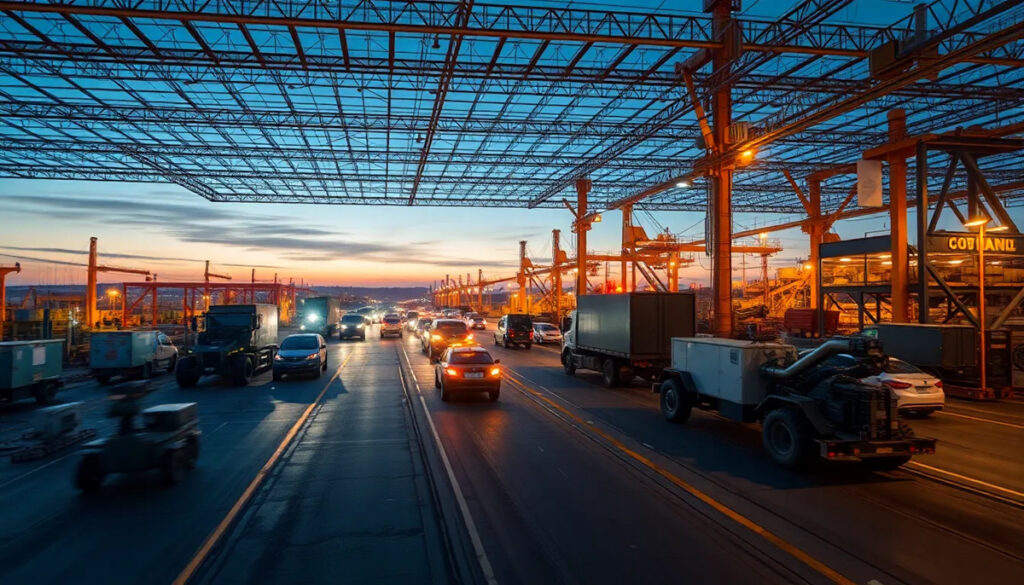
Vehicles roam.
Robots move continuously.
Metal structures appear and disappear.
Sites expand faster than any planning cycle.
Temporary assets become semi-permanent.
When you take an office-style architecture and drop it into this chaos, failure is not a surprise. It is the expected outcome.
Why radio debates miss the point
WiFi, LTE and private cellular all have strengths and weaknesses. None of them are inherently unreliable.
What makes them unreliable is forcing them into architectures that assume stability.
A fixed access point does not care if a vehicle parks in front of it.
A controller does not care if a node disappears without warning.
A static design does not cope when topology changes mid-shift.
When that happens, performance degrades and everyone points at the radio.
The radio is doing exactly what it was told to do. The architecture is what failed it.

Mobility breaks static assumptions
Industrial operations are defined by movement.
Forklifts do not follow neat paths.
Autonomous vehicles reroute constantly.
Personnel expect coverage everywhere.
Assets move faster than documentation updates.
A network that assumes predictable paths will always be chasing reality.
This is why many industrial sites feel like they are constantly “fixing” wireless rather than operating it.
The architecture is fighting the environment instead of aligning with it.
Architecture determines behaviour
Network architecture dictates how a system responds to disruption.
Does it wait for a controller to intervene?
Does it require manual reconfiguration?
Does it break when a node disappears?
Does it assume fixed hierarchy?
Or does it adapt automatically?
In industrial environments, the difference between these two behaviours is the difference between a network that limits operations and one that enables them.
Mesh flips the model
Mesh architecture starts from a different assumption.
Everything moves.
Nodes will appear and disappear.
Paths will be blocked.
Line of sight will change.
Instead of fighting this, mesh expects it.
Nodes discover each other dynamically.
Traffic finds the best available route in real time.
The network heals itself without waiting for instructions.
Failure is treated as normal, not exceptional.
This is not about a specific technology. It is about architectural philosophy.
The network moves with the operation.
The operation does not slow down for the network.
Why architecture matters more than speed
Industrial buyers are often drawn to throughput numbers and latency claims.
Those metrics matter, but only after the network can stay up.
A fast network that drops out under movement is slower than a modest network that stays connected continuously.
Reliability at the architectural level is what enables performance to matter at all.
The hidden cost of bad architecture
Poor architecture rarely fails loudly at first.
It fails quietly.
Intermittent drops.
Video feeds that freeze for seconds.
Control loops that stutter.
Remote interventions that feel delayed.
Teams losing confidence in automation.
Over time, these small failures compound.
Autonomy stops scaling.
Operations slow down.
Safety margins shrink.
People start building workarounds instead of solutions.
At that point, changing radios will not help. The foundation is wrong.
Asking the right question
The most important question in industrial wireless design is not which radio to use.
It is this.
Does the network assume stability, or does it assume movement?
If it assumes stability, it will always be fragile in an industrial environment.
If it assumes movement, disruption becomes survivable.
Conclusion: stop blaming the radio
WiFi is not unreliable by default.
LTE is not a cure-all.
Private 5G is not magic.
Architecture is what determines whether any of them succeed.
Until industrial networking stops borrowing office assumptions and starts designing for real-world behaviour, the same failures will keep repeating under different technology labels.
The radio does not decide how the network behaves.
The architecture does.