We live in a hyper-connected world — and yet, in many industries, connectivity is still the Achilles’ heel.
From construction to public safety, logistics to agriculture, reliable wireless communication is essential. But many organisations still rely on patchy 4G, fragile Wi-Fi, or costly hardwired solutions… simply because they don’t know there’s a better option.
That option is wireless mesh networking.
And the truth is, not enough people know about it.
This post is about changing that — not with technical jargon, but with real-world examples, plain English, and a simple message:
Wireless mesh is the future of resilient, mobile, scalable connectivity.
It’s here. It’s proven. And it’s changing the game in the UK and beyond.
So, What Is Wireless Mesh Networking?
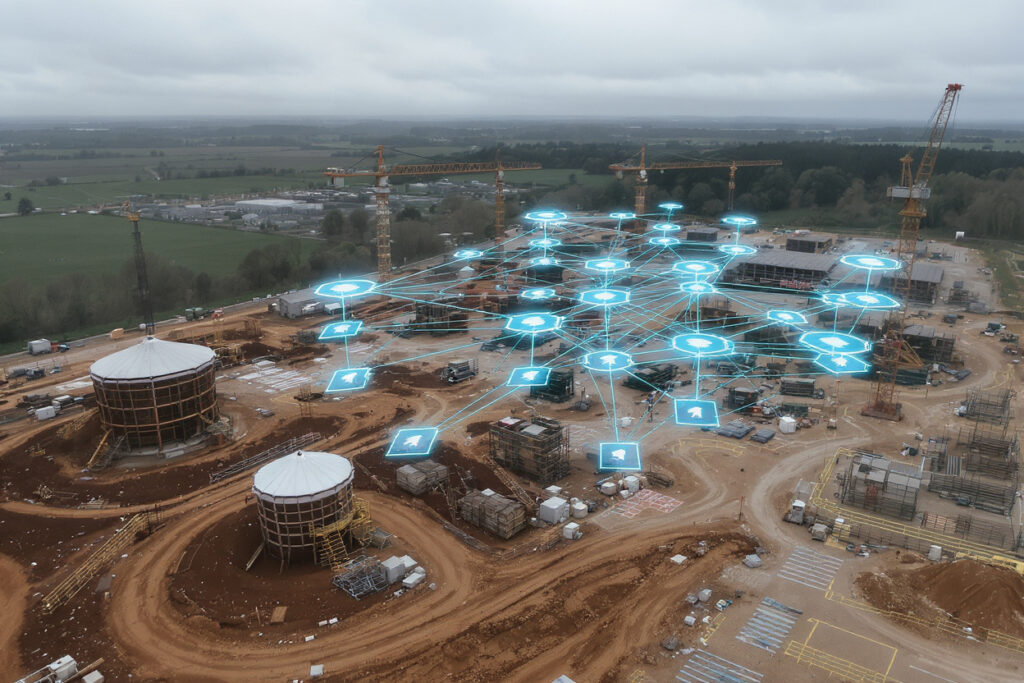
In short: it’s a type of wireless network where each node (device) connects directly with others, creating a flexible, self-healing web of connectivity.
If one node goes down? The network reroutes.
If you add a new node? It joins automatically.
No cables. No line-of-sight radios. No reliance on mobile networks.
Think of it like a flock of birds — constantly adjusting, always connected, no central hub needed.
Why Isn’t Everyone Using This?
Because many simply don’t know it exists — or misunderstand it.
Here’s what we hear all the time:
-
“Sounds like Wi-Fi?”
Nope. Wi-Fi works from a central router. Mesh is decentralised and resilient. -
“Isn’t that for military?”
It was. Now it’s being used on UK construction sites, farms, ports and stadiums. -
“We already have 4G/5G.”
That’s great — until it’s congested, unavailable, or too expensive to scale. -
“Seems overkill for a short-term job.”
Actually, it’s perfect for temporary sites — lift and shift it anywhere.
There’s a huge knowledge gap in the UK about what mesh can do. And it’s costing organisations money, uptime, and peace of mind.
Where Mesh Is Already Working
Let’s break it down by real-world use:
Construction & Infrastructure Projects
From site cabins and security towers to mobile access gates — mesh links it all together, without digging trenches or waiting for fixed lines.
Events & Festivals
Stages, ticket booths, food vendors and security all connect on the same network, even as teams move around.
Emergency Response & Disaster Zones
When everything else fails — mesh doesn’t. No mobile signal needed. Instant pop-up network.
Transport & Rail
Mesh covers tunnels, yards, and remote access points, including mobile inspection vehicles.
Agriculture
Livestock monitors, CCTV, and vehicle telemetry across sprawling farmland — no fibre in sight.
Utilities
Remote sites linked wirelessly for maintenance and monitoring — even in harsh or flooded environments.
This isn’t theory. This is happening — right now, across the UK.
Why You Should Care (Even If You’re Not “Techy”)
This isn’t just for IT managers or engineers.
If you:
-
Run mobile or temporary operations
-
Rely on real-time data or surveillance
-
Have assets or teams spread out across large sites
-
Can’t afford downtime or loss of connectivity
-
Need rapid deployment and easy redeployment
Then you need to know about mesh.
Because when it works (and it does), it changes the way your whole operation communicates, moves, and reacts.
Top 5 Mesh Myths — Busted
Let’s set the record straight.
Myth 1: Mesh is too expensive
Reality: Cost per deployment is often lower than fibre or multi-SIM setups — especially long term.
Myth 2: You need IT people to run it
Reality: The best mesh systems are plug-and-play, with remote management options.
Myth 3: It’s only for security teams
Reality: It’s for any data — drones, sensors, comms, you name it.
Myth 4: It’s not reliable
Reality: It’s more reliable than traditional wireless, thanks to self-healing paths.
Myth 5: It’s hard to scale
Reality: Just drop in a new node. It joins automatically. Done.

What Makes Mesh So Powerful?
Let’s summarise the core benefits:
-
Mobility: Vehicles, people, and assets stay connected as they move
-
Resilience: If one link goes down, another takes over instantly
-
Speed of deployment: Set up in minutes, no fixed lines or digging
-
Scalability: Add or remove nodes with zero manual reconfig
-
Security: Military-grade encryption and access control
It adapts, evolves, and performs in places where other tech fails — and that’s what makes it so valuable.
Why This Tech Deserves More Attention
We’ve worked with dozens of organisations that only discovered mesh by accident — often after a major failure of their existing systems.
They never looked back.
But the wider industry still doesn’t know. And that’s a problem.
Because in a world where resilience, mobility and speed are everything — mesh delivers all three, often at a lower cost than you’d expect.
Conclusion
Wireless mesh isn’t new. But it is still underused — especially here in the UK.
That needs to change.
If you’re planning a site, securing an event, managing field teams or deploying tech to remote areas, you owe it to your operation to explore what mesh can do.
It’s not just better wireless.
It’s a whole new way of thinking about connectivity.