Why Fixed Wireless Mesh Beats Fibre and 4G for Mobile or Temporary Sites
Connectivity is no longer a luxury for mobile sites — it’s a necessity.
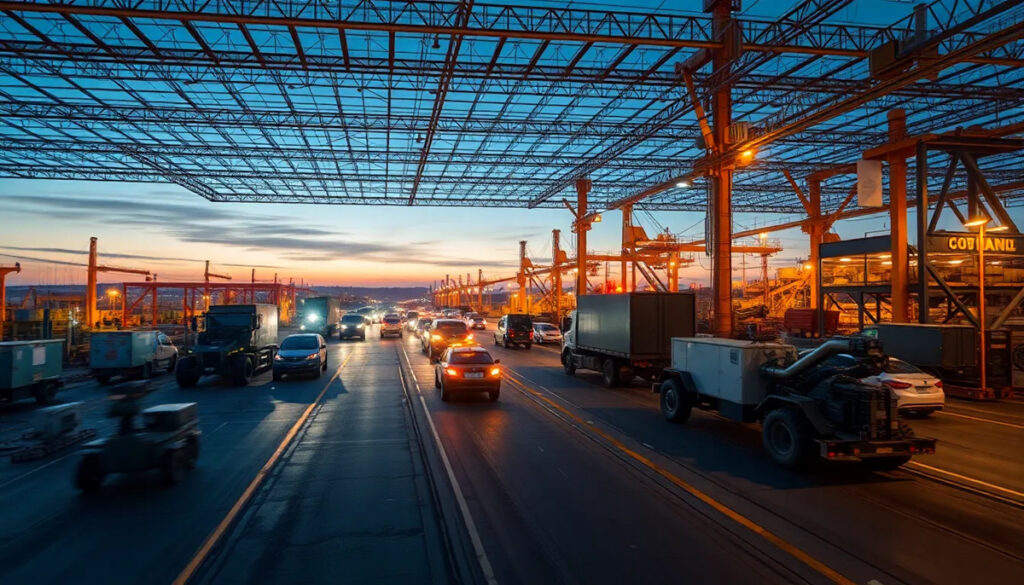
Whether it’s a CCTV tower at a construction site, a mobile command post at a large event, or temporary infrastructure during an emergency, the demand for high-bandwidth, low-latency, and ultra-reliable communications in temporary or hard-to-wire locations is growing rapidly.
Traditionally, the options have been limited: wait for fibre, hope for good 4G, or suffer with patchy, underperforming connections.
But a better solution is gaining momentum — private wireless mesh networks.
In this post, we’ll explore why mesh is fast becoming the go-to choice for mobile deployments, how it compares to legacy solutions, and where it’s being used today to solve critical challenges.
The Limits of Fibre in the Field
Let’s be clear: fibre is brilliant — when it’s already in place.
But that’s exactly the problem. Most temporary or remote deployments don’t have fibre pre-installed, and installing it can be:
Expensive: Trenching, ducting, and civils work quickly add up, especially across large sites or in urban areas where permits are required.
Time-consuming: Installation can take 8–16 weeks, with delays for planning, wayleaves, and traffic management.
Inflexible: Once laid, fibre is static. If your site moves, grows, or reconfigures, you’re stuck with fixed routes.
Fibre is ideal for permanent buildings and core infrastructure — but it’s poorly suited for environments where speed, mobility, and adaptability are key.
Why 4G (and Even 5G) Often Fails in the Field
Mobile networks promise convenience — but in real-world deployments, they often disappoint.
Some of the most common problems with 4G/5G in temporary or mission-critical use cases include:
Congestion: In crowded environments (e.g. festivals, protests, sporting events), public networks become saturated, reducing available bandwidth and increasing latency.
Coverage gaps: Rural, coastal, and industrial locations often suffer from poor cellular coverage — especially deep within buildings or behind obstructions.
Reliability issues: You’re reliant on a third-party provider. If their mast fails, gets overloaded, or goes into maintenance, you have no control.
Security concerns: Data passes through public infrastructure, increasing exposure unless you layer on complex VPNs or encryption.
These risks make 4G/5G unfit for high-security or safety-critical applications where downtime isn’t an option.
What Mesh Brings to the Table
Private fixed wireless mesh networks solve all of these problems in one go.
Unlike point-to-point radio or Wi-Fi repeaters, mesh networks are:
Fully self-healing: If one node fails, traffic is automatically rerouted through the next best path — no engineer intervention needed.
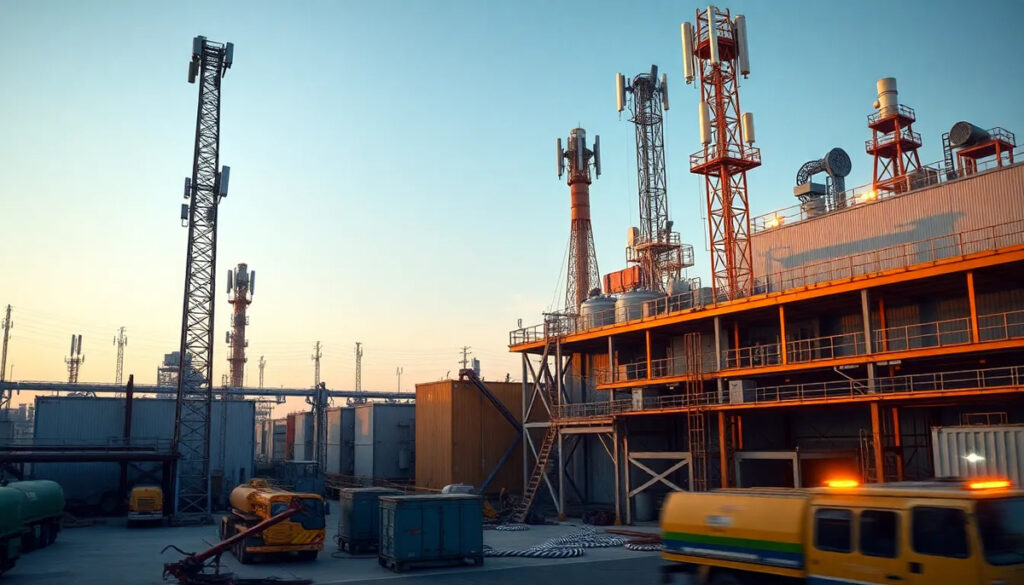
Multi-hop capable: Nodes can extend coverage across terrain, around buildings, or through interference zones — with no line-of-sight needed.
Rapid to deploy: Portable and modular hardware can be live in under an hour, with no groundworks or cabling required.
Secure by design: As a closed private network, your traffic stays off the public internet unless you choose to connect it.
This makes mesh ideal for mission-critical, mobile, or temporary deployments where you need performance and resilience on your own terms.

Real-World Use Cases
Here are just a few environments where wireless mesh is making a tangible impact:
Construction and Utilities
Mobile CCTV towers protecting the perimeter of evolving sites
Connecting temporary offices, welfare units, and access control gates
Linking remote generators or environmental sensors back to HQ
Events and Emergency Response
Mesh-enabled bodycams and tablets for first responders
Command vehicles and drones sharing live video feeds
Temporary HQs connected instantly without waiting for civils work
Ports, Rail and Industrial Sites
Covering large outdoor spaces where fibre is too costly to lay
Supporting mobile workforces with ruggedised communications
Running access control and visitor management over secure, private networks
These are tough environments — physically, logistically, and politically. And they’re exactly where mesh shines.
Comparing the Cost: Mesh vs Fibre vs 4G
Let’s talk numbers.
Mesh networks may appear expensive upfront — especially if you’re comparing them to sticking a 4G SIM in a router.
But look closer:
Fibre installation for even a small site can run into tens of thousands — and it’s not reusable
Poor 4G coverage can mean missed video feeds, unreliable access control, or delayed incident response — with real-world consequences
Mesh equipment is redeployable, rugged, and proven to last across multiple projects
Think in terms of total cost of ownership and operational resilience — not just line items.
Who’s Using It — and Why
Across the UK, we’re seeing increased adoption of mesh networks in:
Local authorities upgrading temporary CCTV infrastructure
Critical national infrastructure sites enhancing resilience
Security integrators needing dependable comms for mobile deployments
Event organisers supporting health & safety and command units
Construction firms looking for simple, secure site-wide connectivity
The common thread? They need reliable comms where traditional networks can’t deliver.
Conclusion
If your site moves, your environment is hostile, or your project can’t wait weeks for connectivity — mesh is no longer a nice-to-have. It’s a necessity.
When the pressure is on, mesh networks let you own your network, reduce your risk, and get up and running fast.
Whether it’s for security, safety, comms or control, fixed wireless mesh gives you a serious edge.
Want to see what it could do for your deployment? – Let’s talk.